
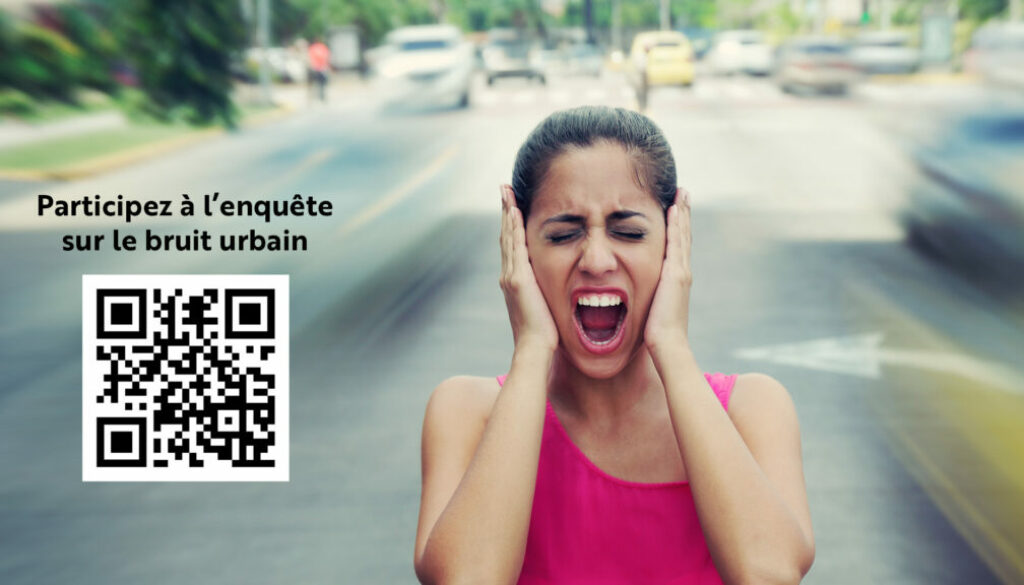
Urban noise survey
In connection with the confinement of populations at home during the Covid-19 pandemic, a general decrease in urban noise has been observed: road, air, and sea traffic, economic activities, construction sites, and works. Noise is known to have a negative impact on the quality of life and mental health of individuals in urban areas, potentially causing problems such as depression, irritability, anxiety, sleep disorders, and addictive behaviours. It is therefore interesting to evaluate the impact of the reduction in urban noise pollution on mental health, in relation to the various confinements imposed by the health situation.
To study the relationships between variations in urban sound intensity and population health indicators (mental health and quality of life) in the context of the lockdown linked to the COVID-19 pandemic, a public questionnaire has been launched. It allows everyone to share their perception of the sound environment (sounds, noises, or even noise pollution in cities), particularly in relation to recent societal/economic changes imposed by the various lockdowns during the COVID-19 epidemic.
[ti_icon size= »medium » icon= »ti-pencil-alt » text= »Participate in the survey » link= »https://bit.ly/CoCoNNuts » target= »_blank » style= »icon-left » text_color= »black » background_color= »#3354a3″ icon_color= »#3354a3″]
This anonymous questionnaire is part of the CoCoNNuts project (Covid-19, Confinement, Noise, gettingNuts), conducted jointly by research teams from the Nice University Hospital Centre (CHU de Nice), the Mediterranean Institute for Risk and Sustainable Development (IMREDD) of Côte d'Azur University, EDHEC Business School, the Nice Institute of Business Administration (IAE de Nice), the City of Nice and the Nice Côte d’Azur Metropolis, the CEA, Siradel, the Sound Environment Observatory (Acoucité.org), and the Nice Brain association.

 Français
  English (UK)