
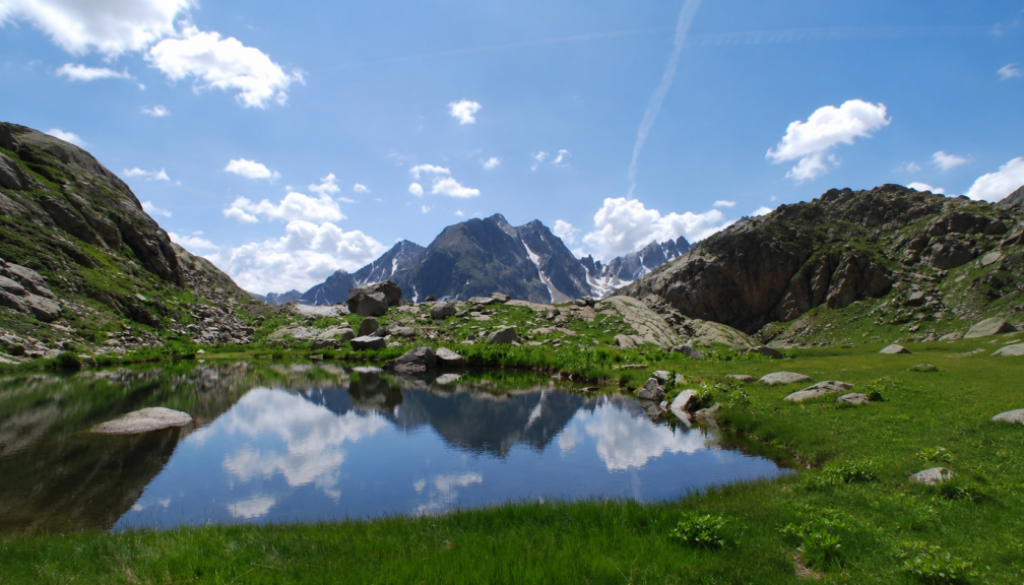
Project ALPIMED+ ECOTERR: better understanding water resources to strengthen the resilience of the Mediterranean Alps
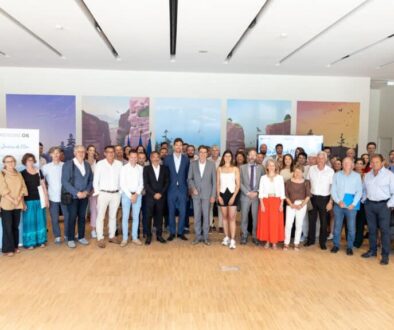
Université Côte d’Azur and IMREDD are taking part in the launch of the project ALPIMED+ ECOTERR, funded under the Interreg ALCOTRA programme. Bringing together 13 French and Italian partners Across the territories of the Alpes-Maritimes, Cuneo and Imperia, this project is part of a cross-border cooperation approach aimed at promoting the sustainable management of natural resources and strengthening the resilience of Alpine territories to climate change. It notably contributes to the implementation of the Cross-Border Climate Charter, to improving knowledge of Alpine ecosystems, and to raising awareness among local stakeholders about environmental issues.
In this context, Université Côte d’Azur is contributing to work dedicated to groundwater resources in mountainous areas.. This participation involves researchers from the laboratories Geoazur and Space, as well as the teams of the’IMREDD for the actions of valorisation and dissemination of knowledge. The project also allows for the strengthening of research capacities through the recruitment of dedicated personnel.
The research will focus on characterising recharge processes and the vulnerability of groundwater resources in the Mediterranean Alps, through studies conducted in the valleys of the Vesubie, of the Roya and Nervia. The aim is to gain a better understanding of the role of geology, tectonic structures, and mountain geomorphology in aquifer functioning, groundwater flow, and water quality evolution. The teams will also work to identify and quantify the different recharge mechanisms of aquifers, as well as analyse their evolution in the context of climate change.
Ultimately, this work will contribute to the development of integrated conceptual and numerical modelling of Alpine and Mediterranean aquifers. The expected results will improve understanding of the functioning of groundwater resources in mountainous areas and provide useful scientific elements for public stakeholders and managers facing the challenges of climate adaptation. Beyond the production of knowledge, they will fuel a dynamic of cross-border cooperation aimed at the sustainable preservation of the natural resources of the Mediterranean Alps.
 Français
  English (UK)