
NDMH – Natural Disasters and Mental Health
This project is funded by Université Côte d'Azur'sAcademy 3 - Space, Environment, Risk and Resilience
Goals
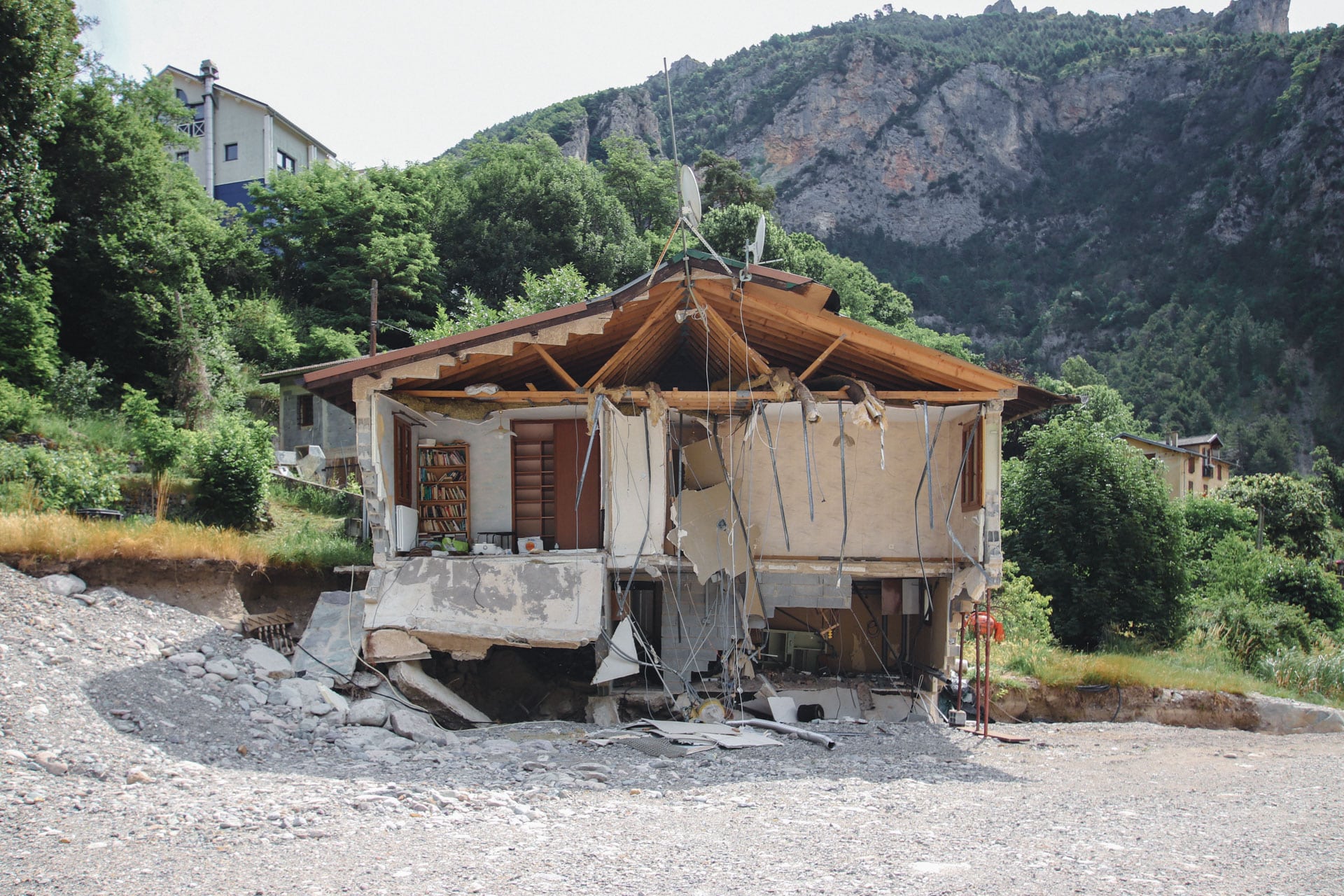
The Natural Disaster and Mental Health project focuses on the vulnerabilities and resilience of populations and territories impacted (Roya and Vésubie valleys) by Storm Alex (October 2020, Alpes-Maritimes, France). This multidimensional disaster combined climatic, hydrological and geological phenomena, along with human, material, economic, social and even political dimensions.
Natural disaster: towards a new territorial momentum?
With 70 municipalities in the Alpes-Maritimes officially recognized as being in a state of natural disaster (under flash floods, river floods, mudslides and landslides), devastated landscapes, considerable material damage and affected populations, could Storm Alex generate new momentum in the valleys of the Alpes-Maritimes?
An interdisciplinary consortium to analyze post-disaster socio-economic resilience
The interdisciplinary consortium brings together researchers in geography, economics, public health and geomatics in order to provide answers to this hypothesis of post-disaster socio-economic resilience. This medium-term resilience, five years after Storm Alex, could be supported by socio-territorial reconstruction actions and by the economic and demographic revitalization of the valley territories.
This research was conducted at two scales: the Roya and Vésubie valleys, and the 12 municipalities affected within these two territories. It combines statistical and spatial analyses of population dynamics from 2013 to 2021, economic structure from 2017 to 2023 (INSEE), document analysis and interviews with local elected officials to identify explanatory factors behind these dynamics and reconstruction targets, as well as spatial analyses of territorial reconstruction actions using aerial imagery, artificial intelligence and field surveys.
Results: demographic dynamics, economic resilience and territorial reconstruction
The research reveals:
- A sharp population decline in the year of the storm, linked to damaged and destroyed buildings no longer allowing residents to stay, damage to road infrastructure leading to reduced accessibility, and possible trauma that may have caused people to leave the area;
- A form of economic resilience marked by two post-disaster resilience trajectories for certain municipalities;
- A diversity of actions implemented to promote the socio-territorial reconstruction of the valleys, with priority given to restoring infrastructure.
Partners





 Français
  English (UK)