
5G Metro

This project is co-financed by the European Union under the Connecting Europe Facility programme.
Goals
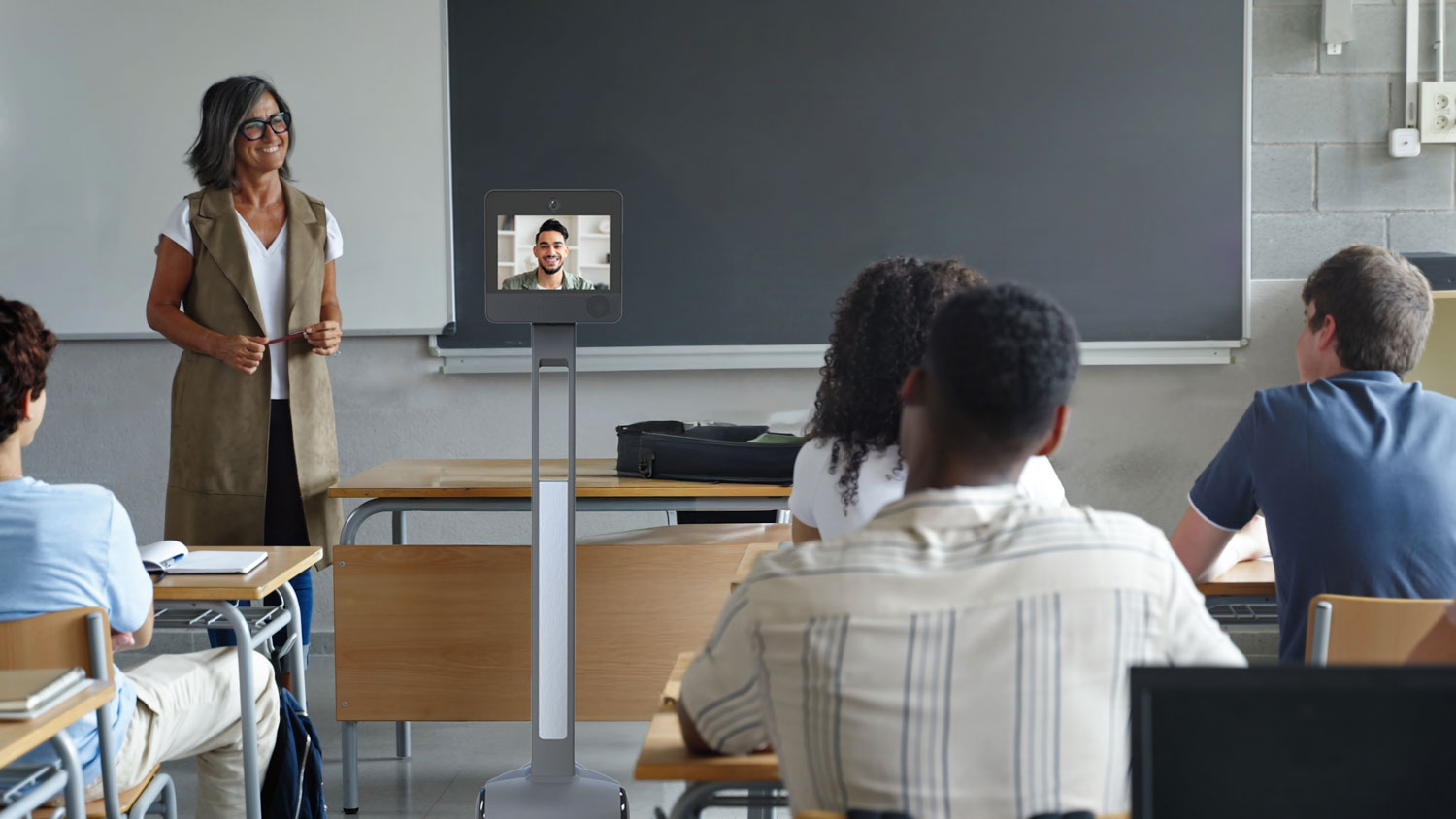
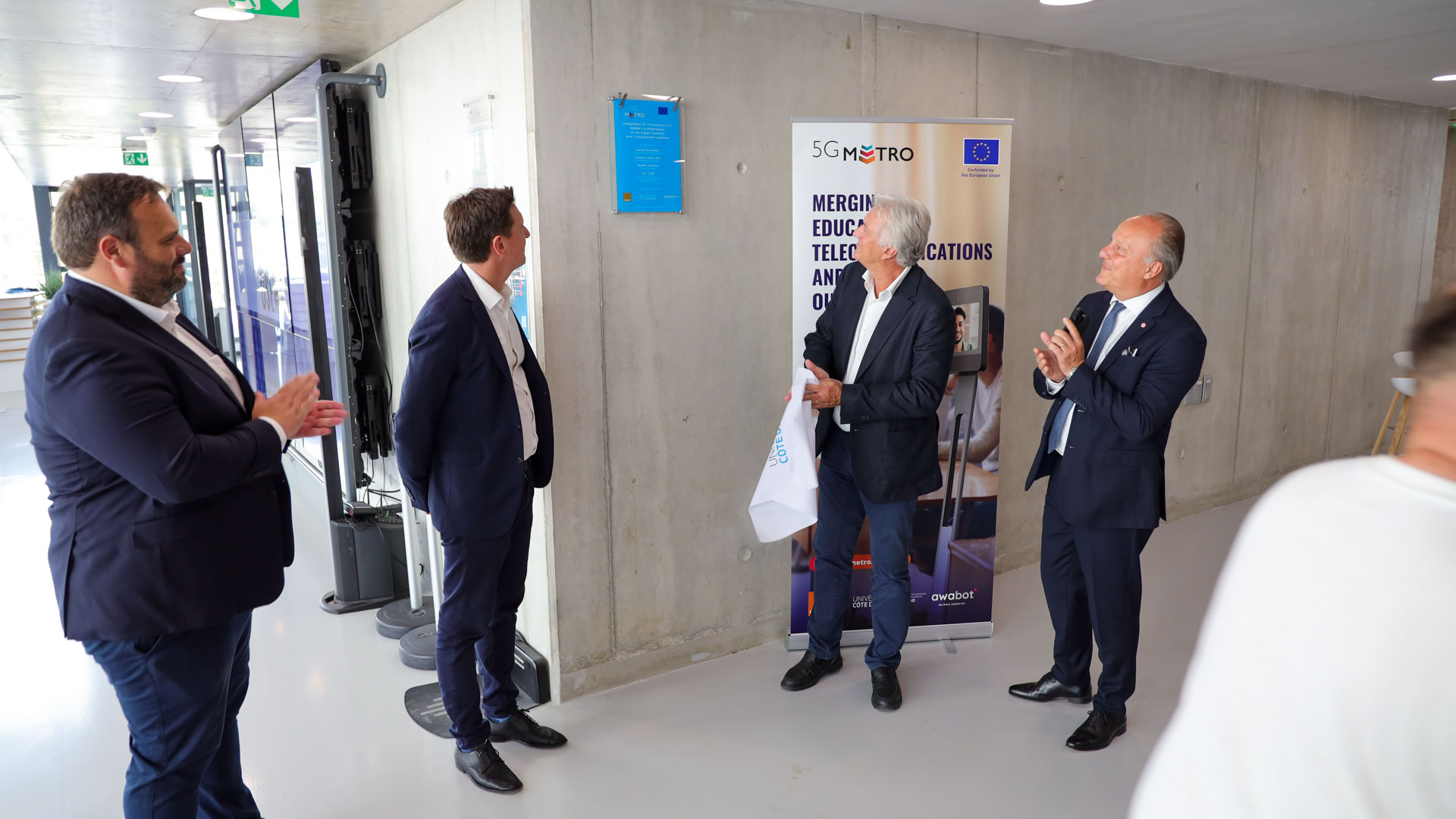
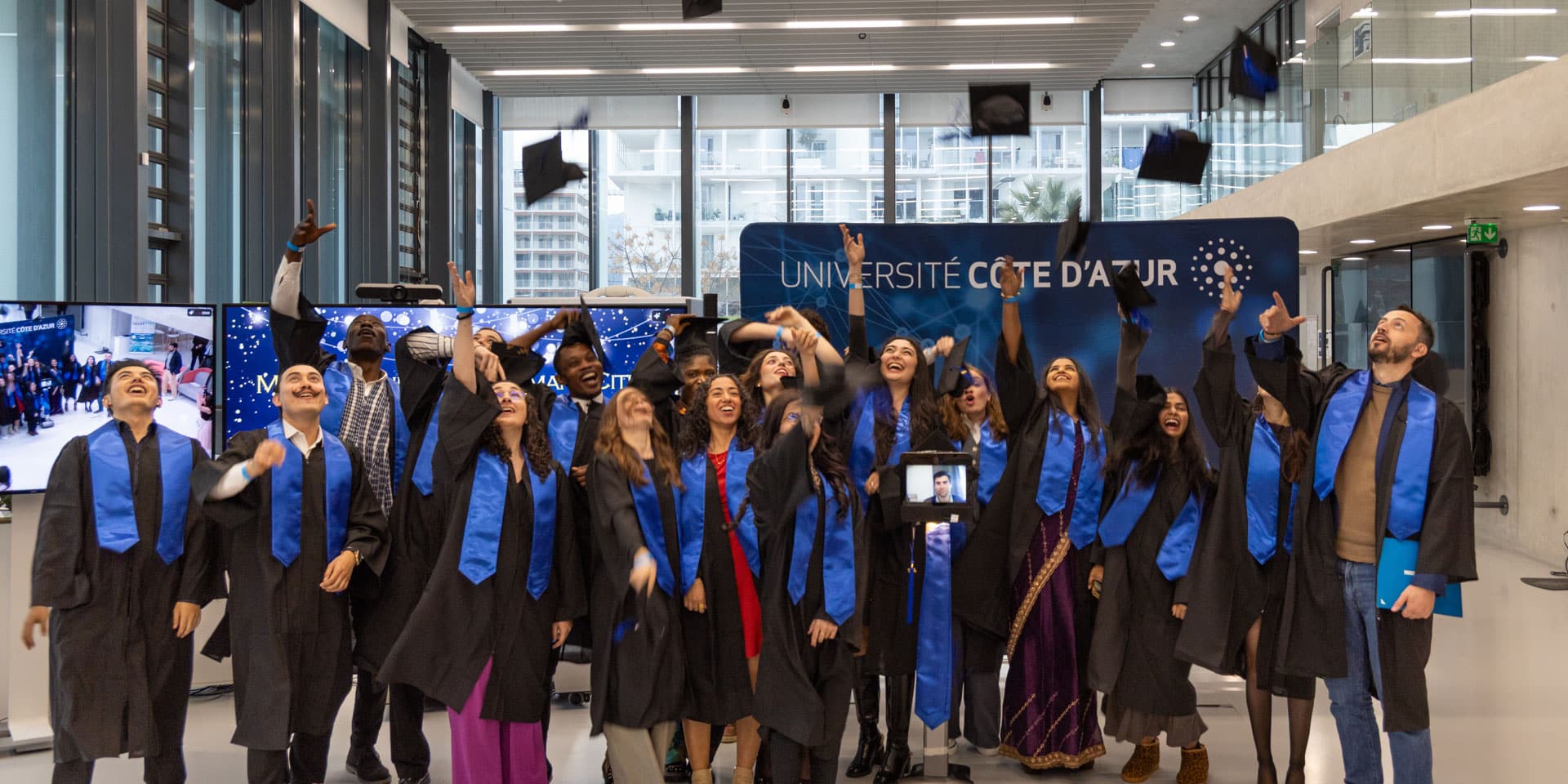
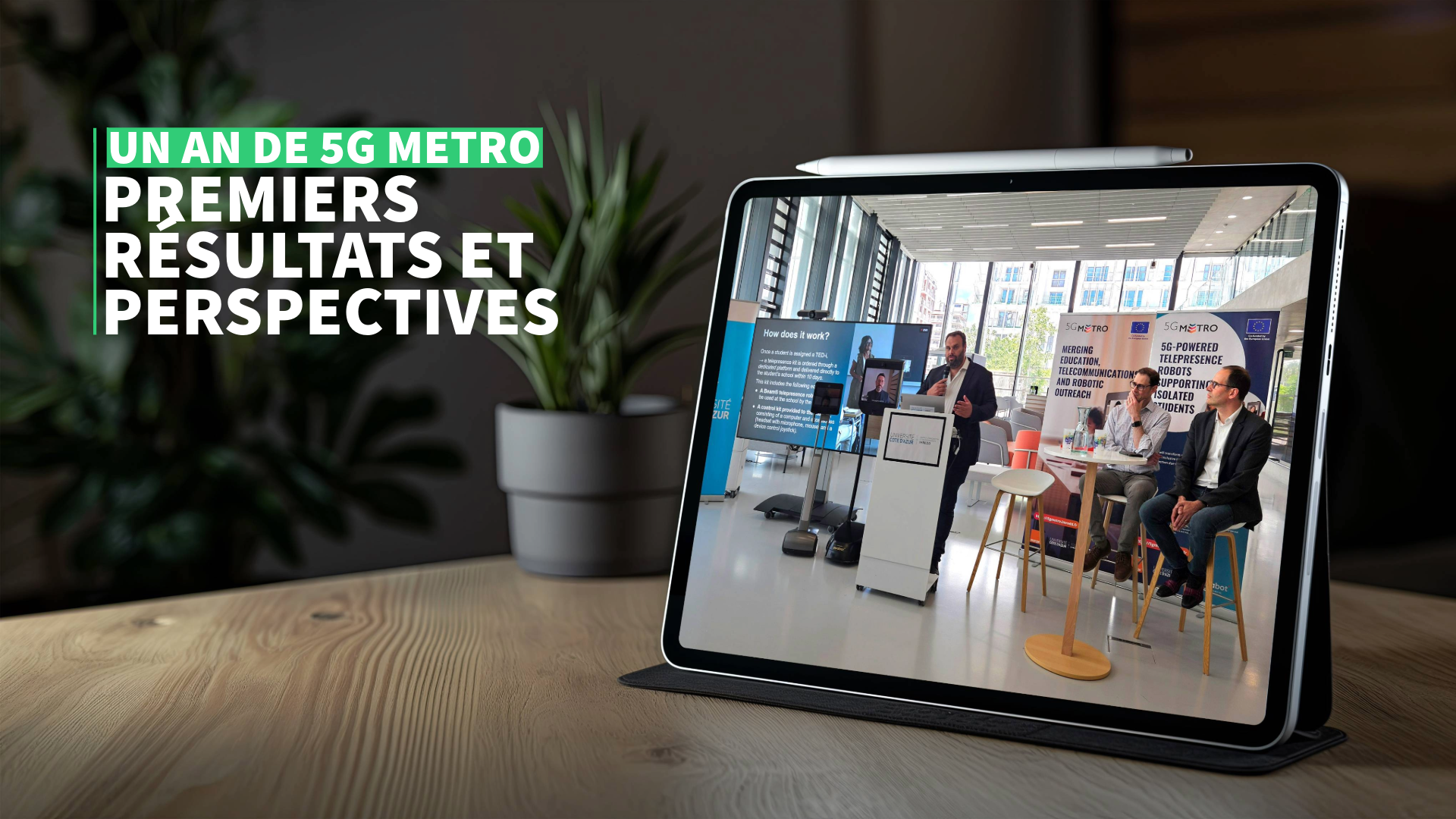
The 5G Metro project aims to revolutionise inclusion in education by deploying a state-of-the-art standalone 5G network infrastructure on the IMREDD campus of the Université Côte d’Azur in Nice. By integrating telepresence robots developed by Awabot, the project seeks to enhance the learning experience for distance learners, particularly those facing social isolation due to hospitalisation or home care.
In an increasingly connected world, distance learning has become essential to ensuring that education is accessible and flexible. However, students confined to their homes or hospitals often suffer from social isolation, which limits their participation in educational activities. The 5G Metro project addresses this challenge by leveraging the speed and low latency of 5G technology to create an inclusive and stimulating learning environment.
Co-funded by the European Commission, the 5G Metro project will run for three years and will:
- Deploy a fully operational standalone 5G network at the IMREDD building.
- Integrate telepresence robots specifically designed for educational use.
- Develop use cases suitable for the university environment.
This infrastructure will enable distance learning students to fully participate in classes, interact with their teachers and peers, and access educational resources, thereby fostering an inclusive and engaging learning experience.
Innovating with AI and mixed reality
Beyond the deployment of 5G and telepresence robots, the project will develop mixed reality applications to offer innovative educational approaches. In collaboration with the I3S laboratory, these solutions will leverage artificial intelligence and immersive environments to:
- To design interactive educational content tailored to the needs of each student.
- To offer dynamic learning experiences, optimising the engagement of everyone, including those participating remotely.
- By combining 5G technology, robotics and mixed reality tools, 5G Metro becomes a powerful driver for inclusive education and the teaching methods of the future, offering immersive, participatory and equitable learning experiences.
Advanced navigation for telepresence robots
The 5G network will also ensure optimal service quality for robot navigation, enabling:
- Horizontal and vertical movements to traverse complex environments.
- Smooth and high-performance navigation thanks to high throughput and minimal latency.
This capability is essential for telepresence robots to navigate obstacles and reach various locations across the campus, thereby ensuring a seamless and adaptable experience for students.
Partners

 Français
  English (UK)