
Territories and Autonomous Shuttles
Goals
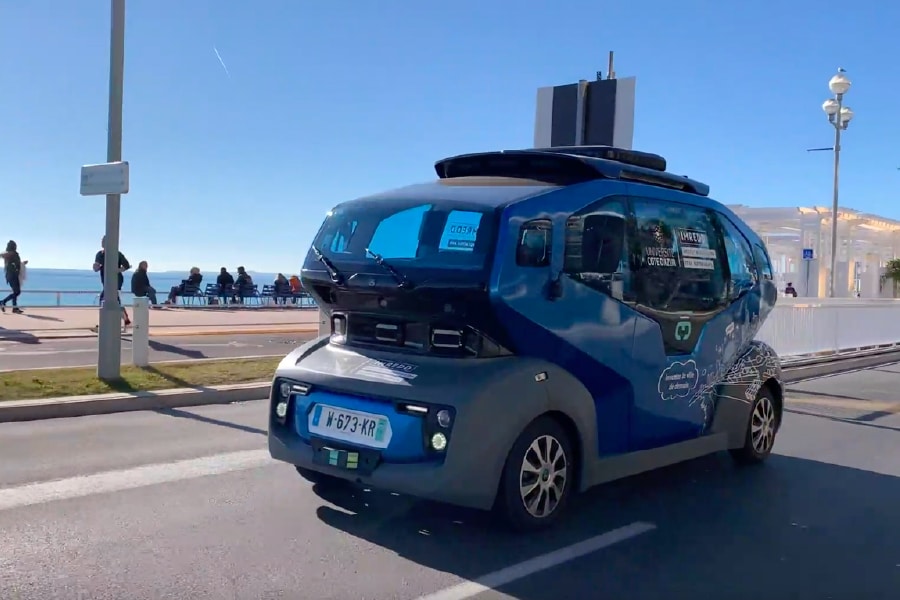
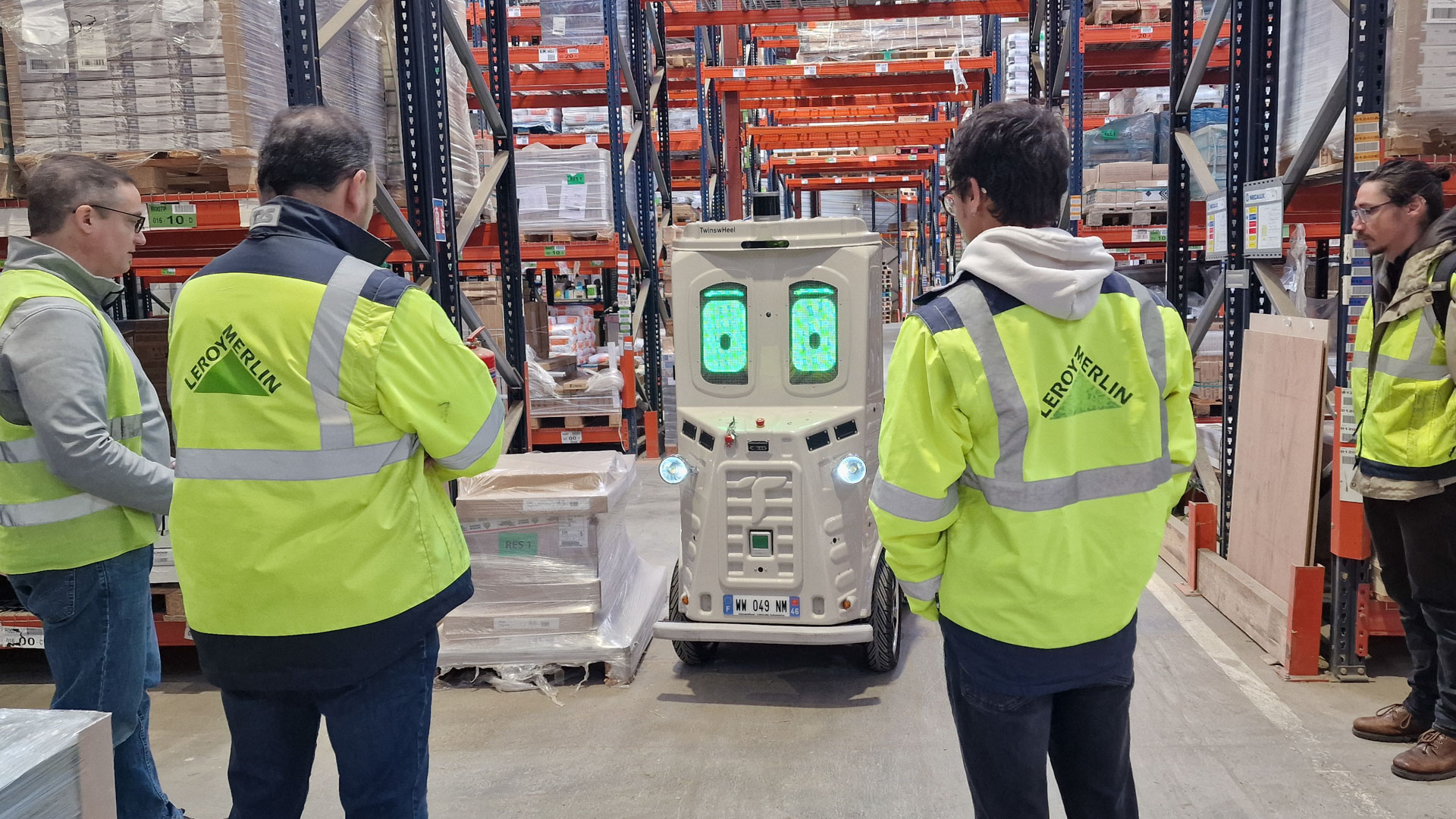
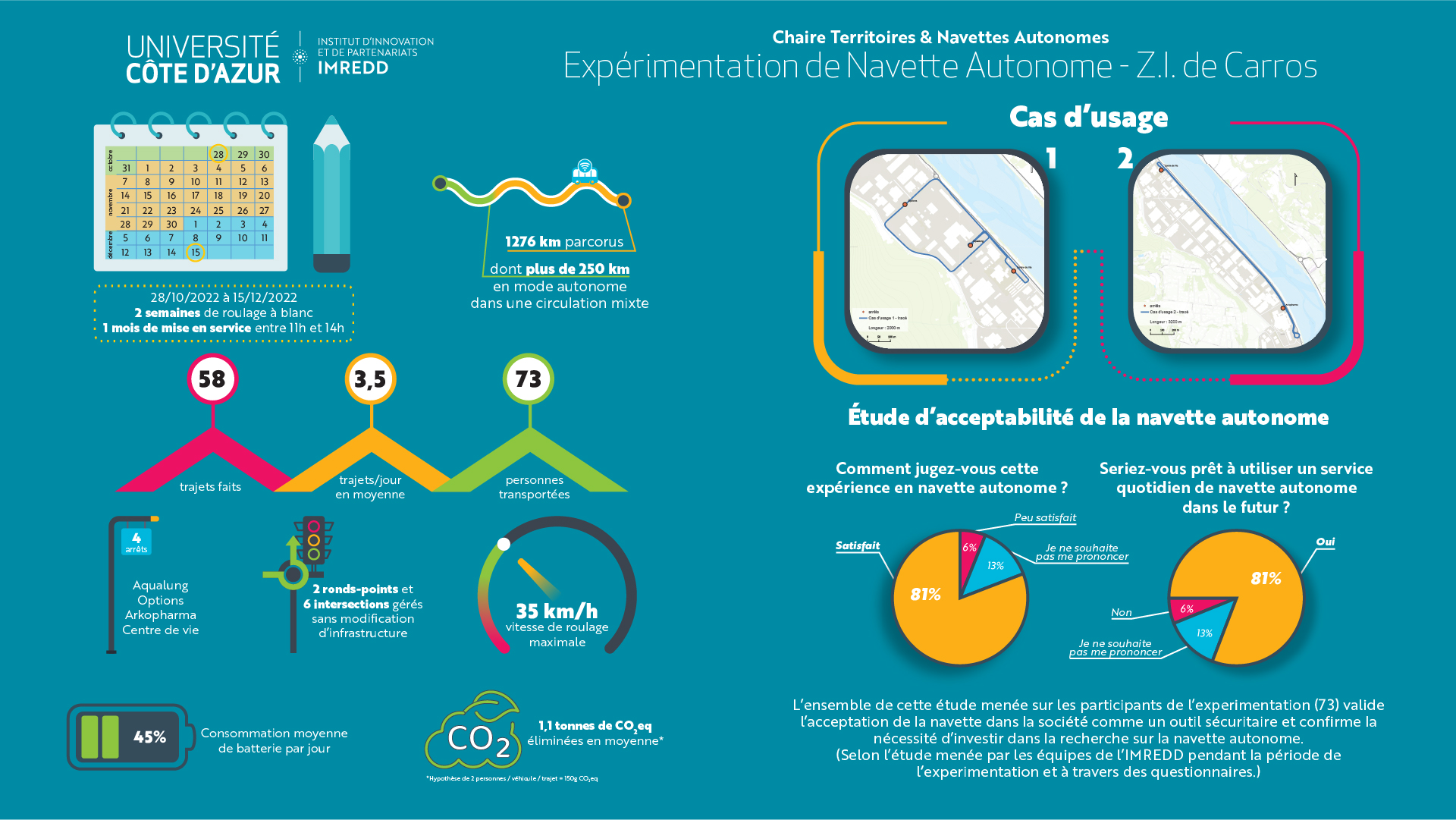
The "Territories and Autonomous Shuttles" Chair aims to establish the territory as a model for territorial development that integrates smart and sustainable mobility, particularly autonomous shuttles, in contexts as varied as dense cities to remote villages. It develops pilot projects for transport and logistics services for the local development of specific areas. These pilot projects concern short-loop transport for daily activities, drawing on local knowledge and case studies that utilise autonomous technologies.
An autonomous vehicle combines sensors, cameras, and radar with artificial intelligence to drive without any human operator. Based on a highly heterogeneous dataset, the AI «learns» and adapts to all possible driving situations. While current developments in autonomous vehicles do not yet allow for handling the most complex situations and guaranteeing all reliability and safety requirements, this solution promises a significant reduction in traffic jams and slowdowns, an end to human errors while driving, and a consequent decrease in accidents. It also enables a range of new services for specific populations, for example by allowing people with reduced mobility to access individual transport despite their disability.
At the heart of these experiments lie R&D challenges revolving around remote supervision, cybersecurity, the operational safety of the mobility system, intelligent connected infrastructure, and the acceptability of the ecosystem. This is where the Laboratory of Informatics, Signals, and Systems of Sophia-Antipolis (i3S) and the TransitionS laboratory (Media – Knowledge – Territories) come in, bringing their expertise on the integration of artificial intelligence technologies (machine learning, deep learning) into autonomous vehicles and on the assessment of individual challenges and barriers to users' acceptance and adoption of autonomous vehicles, respectively.
Partners











 Français
  English (UK)